

Harvest Time
Rincon Mountain Winery

The Harvest: A Labor of Love and Science — and Some Kind of Druidic Magic
With its snobs, aficionados, overpriced tastings, rating systems, certifications, raised pinky fingers, and heated debates over tertiary aromas, it might be easy to forget that wine production comes down to an ancient and much more down-to-earth practice — farming. The cultivation of wine grapes — and the process that turns them into precious vino — is a labor-intensive endeavor. Everything from initial plantings to canopy- and pest management demands careful attention and judicious decision-making. Harvest, in particular, means “all hands on deck.” Wine producers have to manage a variety of unpredictable and capricious forces — from sun exposure to winds and frosts to the start of rainy season — to ensure the ideal conditions for grape growing and ripening. Grapes, you see, are a contrary bunch.
They are at once hearty and resilient, able to withstand and thrive in a wide range of climates, and yet, they can be right bastards to cultivate. This harvest season, wineries along the Central and South Coasts had to consult both scientific instruments and their own “pagan” intuition to decide when to begin the harvest. Pick too soon and the grapes will be underripe. Pick too late and autumn rains could dilute the grapes and promote the spread of mold.
Luckily, the winemakers we’ve spoken with chose wisely: An unexpected warm spell gave the berries just that little bit more “hang time” to ripen — and allowed the harvest to begin right before an “atmospheric river” swept through the region.
The Tour
When we arrived for our tour, winemaker Edward Darren greeted us in work clothes. The winery dogs, Alfie and Lucy, trotted over to sniff us. Alfie hung around to soak up as much attention as she could. Lucy broke away to lie down near Darren, remaining attentive to him, as if taking notes on his presentation. Little gnats and fruit flies danced around our heads, eager to get inside the giant bins stacked nearby, which stored grapes in various stages of wine production.


Rincon Mountain Winery is a small facility perched on Rincon Mountain in Ventura County, some 1,500 feet above sea level, with stunning views of the mountains and ocean. Darren explained that he was inspired by the Renaissance spirit of his father, who pursued everything from collecting vinyl albums to growing Meyer lemons and avocados to, yes, making wine. Darren studied viticulture and enology at Cal Poly. This year marks the winery’s 10th anniversary, which Darren is celebrating with his first harvest of Viognier grapes from Paso Robles. Word to the wise: Among fussy grapes, Viognier is right up there with its fussier red cousin, Pinot Noir. It’s susceptible to powdery mildew, ripens within a narrow window of the growing season, and often produces low yields. It happens to be Darren’s favorite.
The winery produces roughly 1,200 to 1,500 gallons of wine per year — a small enough operation to allow it to be family run, but large enough to get it some local distribution. There are challenges: namely, salt air that wreaks havoc on the equipment, and a mountain road so tortuous and narrow that bottling trucks can’t make the journey up. Everything has to be bottled by hand.
The Wines
After the tour, we adjourned to the breathtakingly scenic patios to take in the views and enjoy the wine. Among Rincon’s library, you’ll find Rhone blends, Sauvignon Blanc, Tempranillo, and Barbera. Most of the grapes are grown in Paso Robles. (In the Rincon mountainside vineyards, several tags also indicated Pinot Noir.)
Darren’s wife, Jill, is a Level 1 somm and helps shepherd the grapes through their entire journey from planting to bottling. It’s also her precise palate that makes the selections that will determine each wine’s final structure and tasting profile.


Uh-Oh! “Raised Pinky” Alert!
Each wine is balanced and restrained while preserving the essential fruit character of each varietal. There are no overdone “fruit bombs” here. (An unfortunate trend among some Paso wineries.) Most of the wines are aged at least partially in new French oak, imparting richness, spice, and complexity.
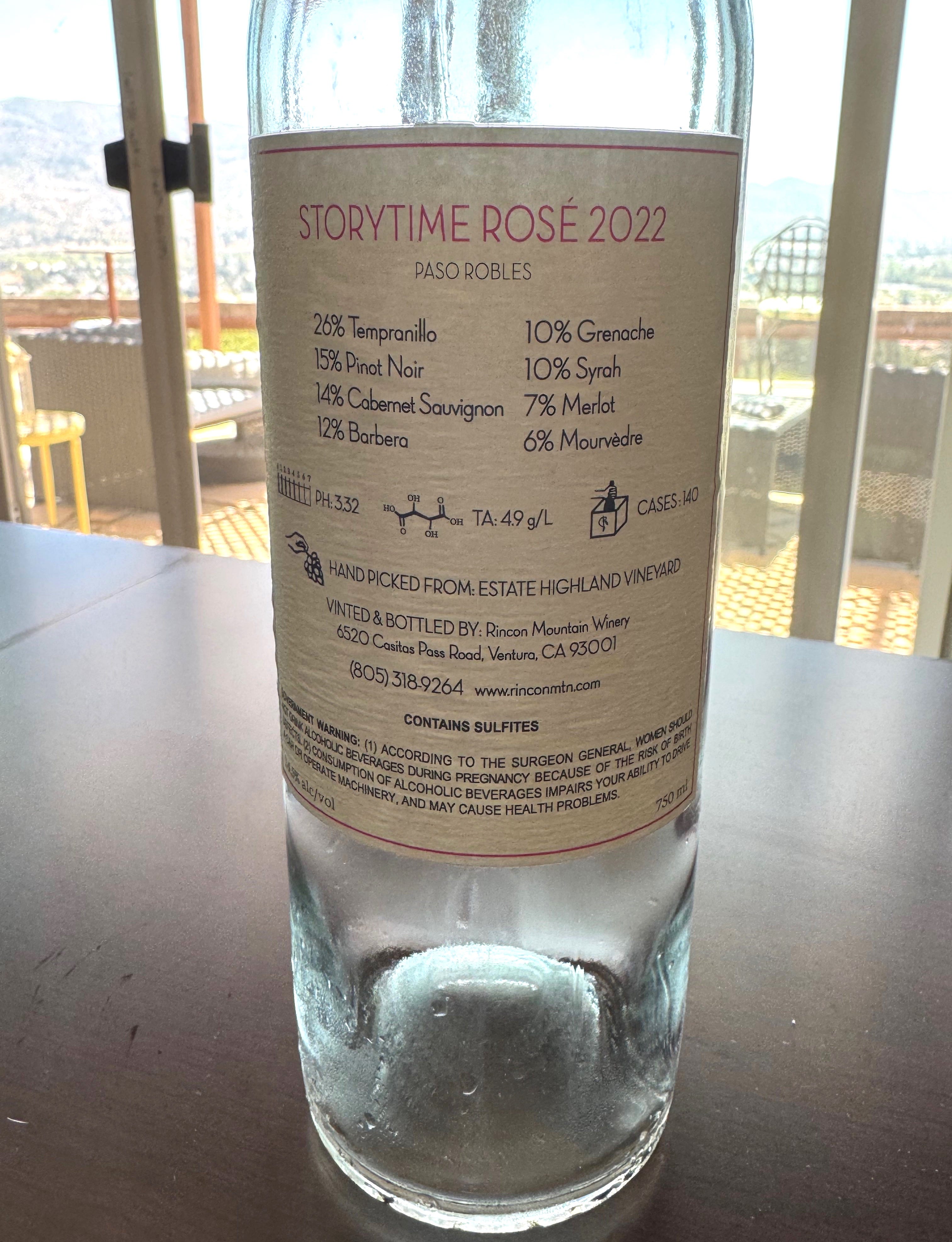
Their rosé is a blend of the free run juices that are “bled off” before the press of several grape varietals, and each vintage delivers its own special brand of funky, inky, smoky, or meaty— and yet, stays bright and refreshing.
And that red blend they playfully call “Dusty Vinyl”? Think “vinyl album” while nosing it and yeah, you may just time-travel back to more youthful days spent in your parents’ rec room, spinning rock albums.
If You Go…
Mountaintop tours and tastings are restricted to members and their guests. Winery tours are offered in the early fall, just before (or at the start of) harvest. Other events, like “Spring on the Mountain” and “Summer on the Mountain” are offered throughout their respective seasons.
To experience their wines a little closer to home, visit their Carpinteria tasting room, located on Carpinteria Avenue, just off the 101.
Like their wines, the tasting room offers an unfussy elegance that’s not without a sense of play. If you like to banter with Jill, her mom, or the other pourers, take a seat at the bar. Maybe put in an album request, and they will happily spin it for you on their double turntable system. Then watch everyone start bobbing and bouncing along to the beat.
Keep an eye out for other events here, too, like blind tastings and themed parties.


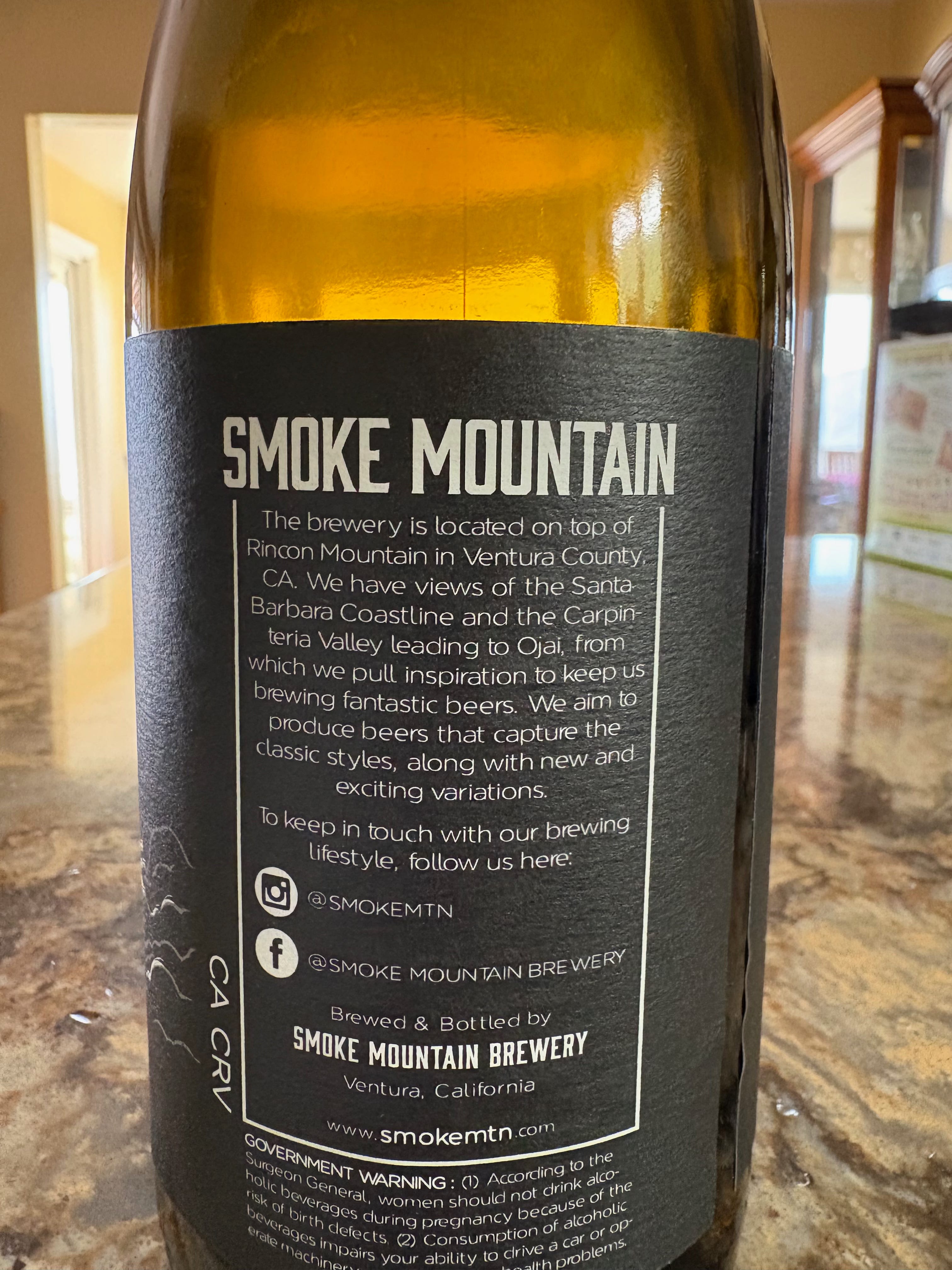
Oh, and Darren also brews bottle-conditioned beers (meaning that a secondary fermentation is completed in-bottle with an extra dose of sugar and yeast), sold under the “Smoke Mountain” label. Dale can’t get enough of them.
We dare you not to fall in love.
Rincon Mountain Winery
Tasting Room
4187 Carpinteria Ave. Suite #1-2
Carpinteria, CA 93013
(805) 318-9264
Thursday-Sunday: 12:00 PM – 7:00 PM
Walk-ins welcome but reservations recommended